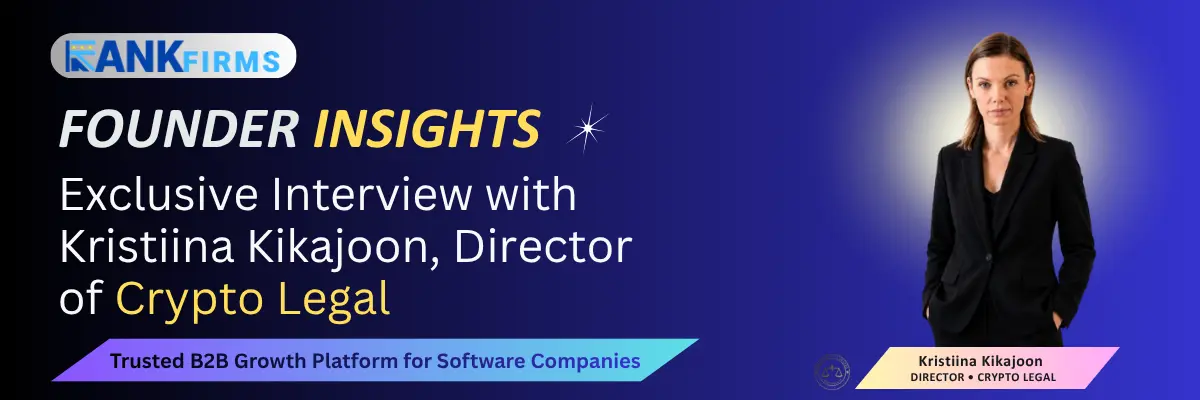
At RankFirms, we are committed to highlighting visionary leaders who are shaping the future of technology, compliance, and innovation. In this exclusive interview, we feature Kristiina Kikajoon, Director & Forensic Investigator at Crypto Legal, an award-winning blockchain legal and forensic firm specializing in cryptocurrency investigations, digital asset disputes, AML compliance, and blockchain intelligence. With extensive experience in blockchain forensics, financial investigations, and cryptocurrency asset tracing, Kristiina has played a pivotal role in helping individuals, businesses, and institutions navigate the increasingly complex world of digital assets. In this interview, she discusses her professional journey, the challenges of blockchain investigations, leadership principles, regulatory trends, and the future of cryptocurrency compliance. Interview 1. Please introduce yourself and tell us about your professional journey leading to your role as Director at Crypto Legal? My professional journey has always been centered around financial investigations, compliance, and digital asset tracing. As cryptocurrency adoption accelerated globally, I recognized that traditional investigative methods were no longer sufficient to address blockchain-based fraud. At Crypto Legal, I have focused on developing forensic investigation methodologies that combine blockchain analytics, financial intelligence, and legal strategy. Today, I oversee complex investigations involving cryptocurrency fraud, blockchain intelligence, compliance, and asset tracing while working alongside our legal and technical specialists to support clients across multiple jurisdictions. 2. What inspired you to pursue a career in blockchain, cryptocurrency, and digital asset law? Blockchain technology completely transformed the financial landscape by introducing new methods of conducting transactions. While this innovation created tremendous opportunities, it also introduced sophisticated forms of financial crime. I became particularly interested in understanding how forensic investigations could evolve alongside blockchain technology. The ability to analyze blockchain data, uncover transaction patterns, and assist victims through technical evidence made this field both intellectually challenging and deeply rewarding. 2. What inspired you to pursue a career in blockchain, cryptocurrency, and digital asset law? Our reputation has been built on consistency, technical expertise, and a multidisciplinary approach. Unlike many firms operating in the digital asset sector, we combine legal knowledge with advanced blockchain forensic capabilities. We continuously invest in professional development, forensic technologies, and regulatory expertise to ensure every investigation is evidence-driven and technically sound. Education is another key pillar of our approach. Many individuals entering the cryptocurrency space have never encountered financial fraud before, so helping clients understand both the risks and available legal options is an essential part of our work. 4. What are some of the biggest legal and regulatory challenges facing the cryptocurrency industry today? One of the most significant challenges is the absence of consistent global regulations. Digital assets move seamlessly across international borders, while legal frameworks remain fragmented and jurisdiction-specific. This creates complexities for compliance, investigations, enforcement, and asset recovery. The industry must also strike the right balance between encouraging innovation and protecting consumers without unnecessarily limiting technological advancement. 5. How do you see the regulatory landscape for digital assets evolving over the next five years? I believe we will witness much stronger international cooperation between regulators and law enforcement agencies. Frameworks such as MiCA demonstrate that governments are moving toward more comprehensive digital asset legislation. Over the coming years, I expect stronger compliance requirements, improved licensing structures, enhanced AML obligations, and greater transparency across virtual asset service providers. As regulations mature, they will increase institutional confidence while providing stronger protection for consumers. 6. What sets Crypto Legal apart from other law firms specializing in blockchain and cryptocurrency? Our greatest strength lies in our multidisciplinary expertise. We bring together legal professionals, blockchain analysts, forensic investigators, compliance specialists, and technical experts under one organization. This enables us to understand both the legal complexities and technical mechanisms behind cryptocurrency transactions. Rather than viewing blockchain solely from a legal perspective, we analyze the complete ecosystem surrounding every investigation, allowing us to deliver highly detailed forensic intelligence that strengthens our legal work. 7. Can you share a client success story that demonstrates the value your team brings to clients? Due to confidentiality obligations, I cannot discuss individual client cases. However, many of our investigations involve tracing cryptocurrency across multiple wallets, cross-chain bridges, decentralized exchanges, and mixing services before identifying regulated exchanges where digital assets ultimately arrive. Our forensic reports have successfully helped clients provide structured technical evidence to exchanges, regulators, law enforcement agencies, and legal representatives. 8. How do you balance legal innovation with compliance in such a rapidly evolving industry? Innovation and compliance should always work together rather than compete with each other. As blockchain technology evolves, new opportunities inevitably introduce new compliance considerations. Our responsibility is to stay ahead of emerging technologies while ensuring our investigative methodologies remain legally robust, evidence-based, and professionally reliable. Continuous research, professional development, and regulatory monitoring are essential to maintaining that balance. 9. What leadership principles have guided you throughout your career? Integrity has always been the foundation of my leadership philosophy. In forensic investigations, credibility is everything. Every conclusion must be objective, evidence-led, and capable of withstanding professional scrutiny. I also strongly believe in collaboration. Blockchain investigations require expertise across multiple disciplines, and the best results are achieved when talented professionals work together toward a shared objective. 10. How does your team stay ahead of emerging technologies and regulatory developments in the blockchain ecosystem? Continuous learning is embedded within our organization. Our team actively monitors developments in blockchain technology, decentralized finance, blockchain analytics, compliance standards, investigative methodologies, and global regulatory guidance. Professional certifications, technical research, ongoing education, and collaboration with international experts enable us to remain current in one of the fastest-evolving industries in the world. 11. What advice would you give to businesses entering the blockchain or digital asset space for the first time? Understand compliance before launching your products. Many organizations prioritize technology while underestimating regulatory obligations, governance requirements, and risk management. Seeking specialist legal and compliance advice early helps prevent costly challenges while building long-term trust with customers, regulators, and investors. 12. How important is education and client awareness in helping… Continue reading Exclusive Interview with Kristiina Kikajoon, Director & Forensic Investigator at Crypto Legal

Exclusive Interview with Stefan Chiriacescu, Founder of eCommerce Today
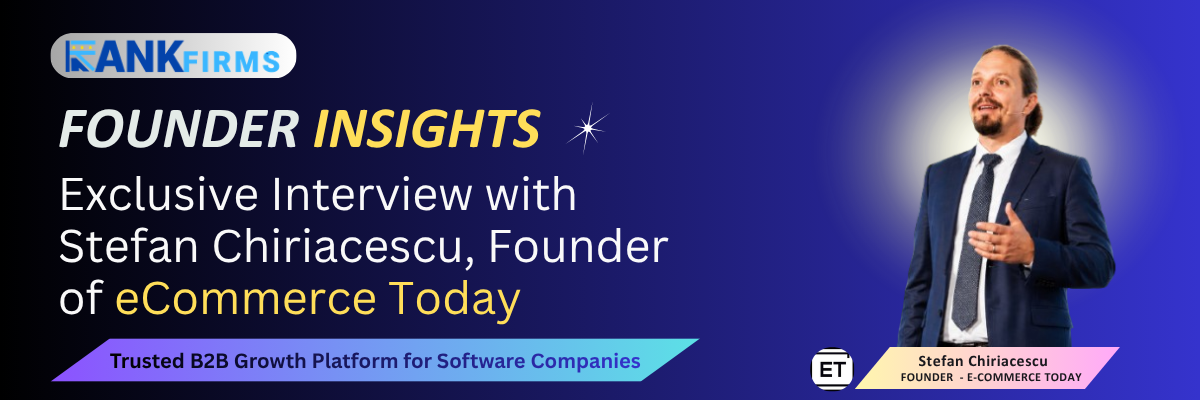
At RankFirms, we love connecting with visionary founders who are transforming industries through innovation and strategic thinking. In this exclusive interview, we feature Stefan Chiriacescu, Founder of eCommerce Today, a leading Shopify growth agency helping direct-to-consumer brands scale through integrated development, lifecycle marketing, and AI-driven optimization. Since launching the company in 2019, Stefan has built eCommerce Today into a trusted growth partner for more than 90 brands across North America, the United Kingdom, and Europe. From Shopify development and conversion optimization to email automation and AI-powered growth strategies, his team delivers a unified approach that helps businesses scale sustainably. In this interview, Stefan discusses his entrepreneurial journey, the inspiration behind eCommerce Today, leadership lessons, emerging eCommerce trends, and practical advice for business leaders navigating today’s rapidly evolving digital landscape. Interview 1. Can you briefly introduce yourself and share your journey to becoming the founder of eCommerce Today? I’m Stefan Chiriacescu, founder of eCommerce Today. I launched the agency in 2019 with a mission to help global DTC brands scale efficiently. Today, we operate as an elite execution hub from Romania, managing growth and technical operations for more than 90 active brands across North America, the UK, and Europe. 2. What inspired you to start eCommerce Today, and what problem were you aiming to solve? I wanted to eliminate what I call the “fragmented agency trap.” Many brands work with separate Shopify developers, PPC agencies, and email freelancers who rarely collaborate effectively. This often results in disconnected strategies and missed growth opportunities. We solved this challenge by introducing a fractional eCommerce department model that provides brands with one coordinated team under a predictable monthly retainer. 3. What is the vision behind eCommerce Today, and how has it evolved? Our vision has always been to replace disconnected teams with a unified execution engine. We initially focused on Shopify implementation projects but gradually evolved into a full Managed Services ecosystem. Today, we believe sustainable eCommerce growth comes from continuously combining custom technical development with lifecycle marketing instead of treating growth as a one-time project. 4. What has been your biggest entrepreneurial challenge? One of our biggest challenges has been balancing reactive technical support with proactive growth initiatives while scaling a team of more than 30 specialists. The biggest lesson I’ve learned is that clear documentation, structured workflows, and strong operational systems consistently outperform relying solely on individual talent. 5. How do you see AI and automation transforming eCommerce? AI dramatically increases execution speed. We’re investing heavily in automated lifecycle marketing through Klaviyo while also focusing on Generative Engine Optimization (GEO). Our goal is to ensure Shopify stores are properly structured to be discovered and recommended by AI-powered search engines and large language models. 6. What differentiates eCommerce Today from other Shopify agencies? Our philosophy is simple: “One retainer. One complete eCommerce team.” Instead of charging separately for development, design, and marketing services, our clients receive access to senior Shopify developers, UX/CRO specialists, and email marketers under one predictable monthly engagement. This integrated model allows every part of the growth strategy to work together seamlessly. 7. Can you share a client success story? We proudly support brands such as VitasupportMD, iSTYLE, and Mobexpert. For our Shopify Plus clients, we often begin by optimizing technical performance, improving site speed, and fixing conversion bottlenecks. We then implement advanced Klaviyo automation that improves customer retention and lifetime value. By solving conversion issues before increasing acquisition efforts, our clients consistently achieve strong long-term growth. 8. What leadership principles have helped you build a high-performing team? I strongly believe in autonomy and accountability. Rather than micromanaging daily activities, our team members own their responsibilities and are evaluated based on measurable business outcomes such as conversion rates, customer lifetime value, and operational efficiency. 9. How do you encourage collaboration across departments? Traditional agency silos create unnecessary friction. Instead, we organize our people into cross-functional client squads managed by dedicated Project Managers. Developers, designers, marketers, and client success professionals work together under one structure, enabling faster communication and better execution. 10. What common mistakes do brands make when scaling online stores? Many brands invest heavily in paid advertising while neglecting conversion optimization and customer retention. Driving traffic to a slow website without automated email marketing significantly reduces ROI. Businesses should first optimize conversions, build strong lifecycle marketing systems, and then scale customer acquisition. 11. Which trends will shape the future of eCommerce? Three major trends will define the next five years: Greater ownership of first-party customer data through email and SMS marketing. AI-powered search assistants changing how customers discover products. Increasing demand for lightning-fast custom Shopify storefronts. 12. What advice would you give entrepreneurs building online businesses? Understand your unit economics from the beginning. Know your customer acquisition cost, lifetime value, and true profit margins. Focus on building an authentic brand that transforms one-time buyers into loyal repeat customers instead of relying solely on paid advertising. 13. What achievement are you most proud of? I’m proud of building an independent team of more than 30 world-class eCommerce specialists while maintaining a perfect 5-star rating across leading agency directories such as Clutch. 14. What exciting developments can we expect from eCommerce Today? We’re expanding our operational presence across North America to better serve our growing portfolio of U.S. and Canadian DTC brands. Additionally, we’re introducing specialized AI-powered Shopify optimization audit frameworks to help businesses maximize performance in the evolving AI search landscape. 15. What message would you like to share with aspiring entrepreneurs? Execution always beats endless planning. Launch your business, analyze real customer data, listen carefully to your audience, iterate quickly, and stay committed to creating genuine value. Consistent execution is what ultimately drives long-term success. About Stefan Chiriacescu Stefan Chiriacescu is the Founder of eCommerce Today, a Shopify growth agency that helps direct-to-consumer brands accelerate growth through Shopify development, conversion optimization, lifecycle marketing, and AI-powered eCommerce strategies. Under his leadership, the agency has become a trusted partner for more than 90 brands worldwide by delivering integrated, data-driven growth solutions.… Continue reading Exclusive Interview with Stefan Chiriacescu, Founder of eCommerce Today
Exclusive Interview with Ashutosh Bhatia | AleaIT Solutions
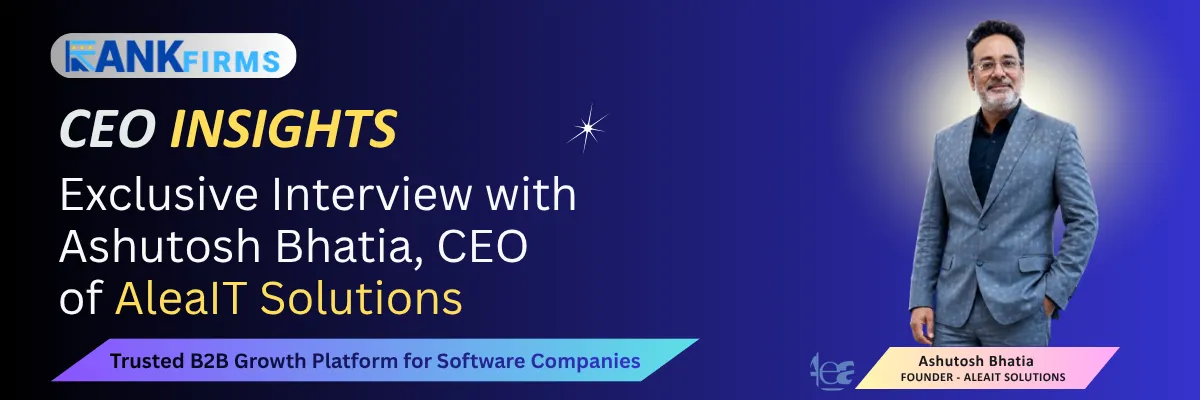
In this exclusive conversation with RankFirms, we speak with Ashutosh Bhatia, CEO of AleaIT Solutions, about his entrepreneurial journey, the company’s vision, digital transformation, AI innovation, leadership philosophy, and the future of custom software development. He shares valuable insights into building scalable technology solutions, leading high-performing teams, and helping businesses accelerate their digital growth. Gain valuable insights from Ashutosh Bhatia, CEO of AleaIT Solutions, in this exclusive CEO interview. Discover his leadership philosophy, industry perspective and vision for the future of technology and innovation. At RankFirms, we believe every successful technology company is driven by innovation, strong leadership, and a commitment to solving real-world business challenges. In this exclusive interview, we feature Ashutosh Bhatia, CEO of AleaIT Solutions, who shares his entrepreneurial journey, the inspiration behind the company, and his vision for helping businesses succeed through technology. From AI-powered solutions and digital transformation to leadership, customer success, and emerging industry trends, Ashutosh offers valuable perspectives for entrepreneurs, business leaders, and organizations looking to embrace innovation and sustainable growth. Interview 1. What inspired you to start AleaIT Solutions, and what problem in the technology industry were you most determined to solve at the beginning? The inspiration behind starting AleaIT Solutions came from a strong belief that technology should be accessible, practical and capable of solving real business challenges. Early in my career, I noticed that many businesses struggled to adopt technology effectively. They often had access to tools but lacked the right strategic guidance and development expertise to turn those tools into impactful solutions. I founded AleaIT Solutions with the goal of bridging that gap helping businesses leverage technology not just for automation, but for transformation. From the very beginning, our focus has been on building scalable, efficient and user-centric digital solutions that genuinely improve how companies operate and grow. 2. What inspired you to establish AleaIT Solutions, and what problem were you aiming to solve? The inspiration came from seeing businesses invest in technology without receiving solutions tailored to their actual needs. We wanted to bridge that gap by delivering customized software, mobile applications, and digital transformation services that genuinely solve business challenges instead of offering generic products. 3. What is the vision behind AleaIT Solutions, and how has it evolved since the company was founded? Our vision has always been to become a trusted technology partner for businesses worldwide. Over the years, we have expanded from delivering software development services to providing complete digital transformation solutions, integrating AI, cloud technologies, enterprise applications, and customer-centric innovation into every project. 4. What has been the biggest challenge you’ve faced as an entrepreneur, and what lessons have you learned? One of the biggest challenges has been scaling the organization while maintaining quality and customer satisfaction. Growth brings complexity, but we’ve learned that investing in people, building strong processes, and maintaining transparent communication are essential for long-term success. 5. How do you see AI, automation, and emerging technologies transforming the future of software development? AI and automation are fundamentally changing how software is built and how businesses operate. They enable faster development, smarter decision-making, improved customer experiences, and greater operational efficiency. The future belongs to organizations that embrace these technologies while continuing to focus on solving real customer problems. 6. What differentiates AleaIT Solutions from other technology companies? Our biggest differentiator is our client-first mindset. We don’t simply develop software—we work closely with our clients to understand their business objectives and deliver scalable, reliable, and future-ready solutions. Our focus is always on building long-term partnerships rather than short-term projects. 7. Can you share a client success story that reflects the impact of your team’s work? We’ve had the privilege of helping businesses across various industries modernize their operations through custom software and digital transformation initiatives. Seeing clients improve productivity, streamline workflows, and achieve measurable business growth through our solutions continues to be one of our greatest achievements. 8. What leadership principles have helped you build a high-performing team? I believe in trust, collaboration, continuous learning, and accountability. Every team member should feel empowered to contribute ideas and take ownership of their work. When people are trusted and supported, they consistently deliver exceptional results. 9. How do you ensure collaboration between development, design, project management, and client success teams? Effective collaboration begins with clear communication. We encourage cross-functional teamwork from the start of every project, ensuring that developers, designers, business analysts, and project managers work together toward a common objective while keeping the client’s business goals at the center of every decision. 10. What common mistakes do businesses make during digital transformation, and how can they avoid them? Many organizations adopt technology without defining clear business objectives. Digital transformation should never be about technology alone—it should focus on improving processes, customer experiences, and business outcomes. A well-defined strategy and continuous collaboration are critical for success. 11. Which technology trends do you believe will have the biggest impact over the next five years? Artificial intelligence, cloud computing, cybersecurity, low-code development, automation, and data analytics will continue transforming industries. Businesses that invest in innovation while remaining agile will have a significant competitive advantage. 12. What advice would you give entrepreneurs and organizations embracing digital transformation? Start with your customers’ needs rather than the latest technology trends. Build solutions that solve real problems, remain adaptable, invest in your team, and continuously innovate. Sustainable growth comes from delivering consistent value. 13. What achievement are you most proud of in your entrepreneurial journey? I’m most proud of building a talented team that shares a common vision of innovation and excellence. Watching our clients succeed through the solutions we’ve developed together is incredibly rewarding and motivates us to keep pushing boundaries. 14. What exciting plans or innovations can we expect from AleaIT Solutions in the near future? We are continuously investing in AI-driven solutions, cloud technologies, enterprise software, and emerging digital innovations. Our focus… Continue reading Exclusive Interview with Ashutosh Bhatia | AleaIT Solutions
Exclusive CEO Interview: Michael Frederick Shares the Vision Behind Swovo
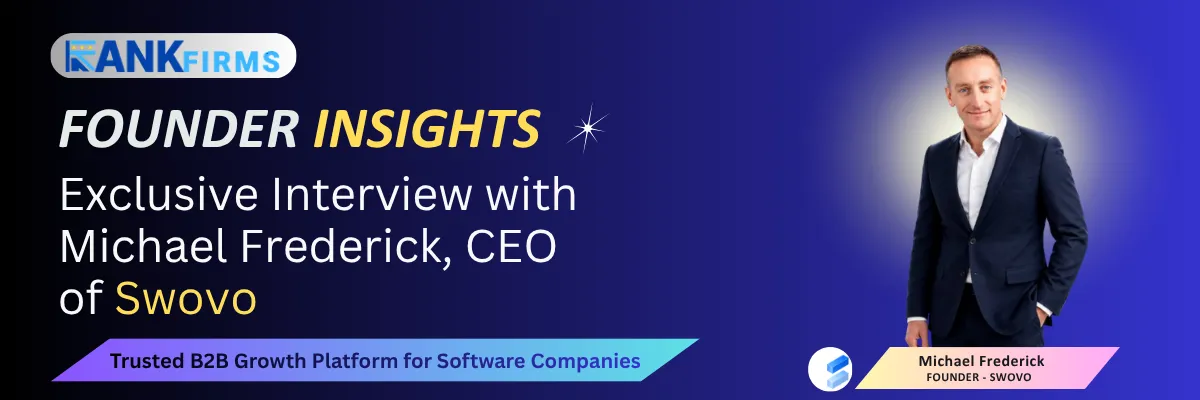
At RankFirms, we enjoy highlighting visionary leaders who are redefining their industries through innovation and customer-focused thinking. In this exclusive interview, we feature Michael Frederick, CEO of Swovo, who discusses his entrepreneurial journey, the company’s mission, and the strategies that continue to drive its growth. From leadership lessons and emerging technologies to customer success and future expansion, Michael offers valuable advice for entrepreneurs and organizations striving for long-term success. Interview 1. Can you briefly introduce yourself and share your professional journey leading to becoming the CEO of Swovo? My entrepreneurial journey has always been driven by a desire to solve real business challenges through technology and innovation. Throughout my career, I’ve worked closely with businesses to understand operational bottlenecks and identify opportunities for growth. These experiences ultimately inspired me to lead Swovo, where our mission is to build practical solutions that help organizations operate more efficiently while delivering exceptional customer experiences. 2. What inspired you to establish Swovo, and what problem were you aiming to solve? Swovo was created with a simple goal: to make business processes smarter, more efficient, and easier to manage. We noticed that many organizations struggled with disconnected systems and outdated workflows. Our vision was to develop solutions that simplify operations while helping businesses focus on growth instead of administrative complexity. 3. What is the vision behind Swovo, and how has it evolved over time? Our vision has always been to become a trusted technology partner that helps businesses embrace digital transformation with confidence. As customer needs have evolved, we’ve expanded our capabilities, invested in innovation, and continuously improved our solutions to deliver greater value and long-term business impact. 4. What has been one of the biggest challenges you’ve faced as an entrepreneur? One of the biggest challenges has been balancing rapid growth with maintaining service quality. As companies expand, it’s easy to focus solely on scaling. We’ve learned that sustainable growth comes from investing equally in people, processes, and customer relationships. 5. How do you see AI and emerging technologies shaping the future of your industry? Artificial intelligence is transforming how businesses make decisions, automate repetitive tasks, and improve customer experiences. Rather than replacing people, AI should empower teams by providing better insights and allowing them to focus on strategic work that creates real value. 6. What differentiates Swovo from other companies in the market? Our biggest differentiator is our customer-first approach. We don’t believe in one-size-fits-all solutions. Every organization has unique goals, and we work closely with clients to understand their requirements before designing solutions that align with their long-term objectives. 7. Can you share a success story that reflects the impact of your team? One of our most rewarding achievements has been helping businesses streamline complex operations and significantly improve efficiency through technology. Seeing our clients achieve measurable business growth and long-term success is always the greatest validation of our work. 8. What leadership principles have guided your success? I believe leadership begins with trust, accountability, and continuous learning. Building an environment where people feel empowered to contribute ideas and take ownership creates stronger teams and better outcomes for both employees and customers. 9. How do you encourage collaboration across your organization? Open communication is essential. We promote cross-functional collaboration by ensuring different teams work together from the beginning of every project. This allows us to solve problems faster and deliver more innovative solutions. 10. What common mistakes do businesses make when adopting new technology? Many businesses invest in technology without first understanding their actual business needs. Technology should always support a clear strategy rather than becoming the strategy itself. Success comes from aligning innovation with measurable business goals. 11. Which industry trends do you believe will have the biggest impact over the next five years? Artificial intelligence, automation, cloud technologies, data-driven decision-making, and enhanced customer personalization will continue to reshape how businesses operate. Organizations that embrace these changes early will be better positioned for sustainable growth. 12. What advice would you give entrepreneurs building businesses today? Stay focused on solving genuine customer problems. Build strong relationships, remain adaptable, and never stop learning. Sustainable businesses are built through consistent execution rather than chasing short-term trends. 13. Looking back, what achievement are you most proud of? I’m most proud of building a talented team that shares a common vision and consistently delivers meaningful value to our clients. Watching both our people and our customers succeed has been the most rewarding part of the journey. 14. What exciting initiatives can we expect from Swovo in the near future? We’re continuing to invest in product innovation, AI-driven capabilities, and expanding our services to support more businesses globally. Our focus remains on delivering smarter solutions that help organizations become more agile and competitive. 15. Finally, what message would you like to share with aspiring entrepreneurs and business leaders? Success doesn’t happen overnight. Stay committed to your vision, embrace challenges as opportunities to learn, and always put your customers first. Consistency, resilience, and a willingness to innovate will take you further than chasing quick wins. About Michael Frederick Michael Frederick is the CEO of Swovo, where he leads the company’s strategic direction, innovation initiatives, and business growth. Passionate about technology and customer success, he is committed to helping organizations leverage modern solutions to achieve sustainable growth. About Swovo Swovo provides innovative technology solutions designed to help businesses improve efficiency, streamline operations, and accelerate digital transformation. By combining industry expertise with customer-focused innovation, Swovo empowers organizations to overcome challenges and achieve measurable business success.